A modern warehouse is still a working environment
Even the most robust warehouse storage systems are subject to constant stress. Forklift traffic, changing stock profiles, and peak operational pressure all take their toll.
This is the reality often overlooked in warehouse modernisation projects. A retrofit introduces stronger, safer, and more efficient solutions, but it does not eliminate wear and tear.
In fact, as throughput increases, so does the strain on:
- Pallet racking systems
- Shelving and mezzanine structures
- Material handling equipment
- Rack protection and safety systems
This is why warehouse maintenance and lifecycle thinking are becoming just as important as the retrofit itself.
Shift from installation mindset to asset management
A common mistake is treating a retrofit as a one-off capital project. In reality, it should be viewed as the start of an ongoing asset management strategy.
Warehouses that get the most from their investments tend to:
- Implement structured warehouse maintenance plans
- Monitor system performance regularly
- Take a proactive approach to repairs and upgrades
This shift is what separates short-term improvements from long-term operational gains.
Build a practical warehouse maintenance routine
One of the most effective ways to extend system lifespan is to introduce a structured warehouse maintenance checklist. Not as a compliance exercise, but as part of daily operations.
Daily checks
- Visual inspection of racking for damage or misalignment
- Clear aisles and safe access routes
- Immediate reporting of impacts or hazards
- Basic equipment condition checks
Weekly checks
- Review of high-traffic areas, such as end-of-aisle frames
- Inspection of rack protection systems
- Identification of repeated impact zones
- Equipment and workflow bottlenecks
Monthly checks
- Structural assessment of racking and shelving systems
- Load compliance and pallet condition
- Review of safety accessories and signage
- Housekeeping standards across the facility
Annual checks
- Formal racking inspection by a qualified expert
- Structural integrity review
- Identification of upgrade or refurbishment opportunities
This layered approach ensures that small issues do not escalate into costly failures, downtime, or safety risks.
Focus on high-impact risk areas
Not all parts of a warehouse experience equal wear. Certain zones are far more vulnerable and should be prioritised:
- End-of-aisle frames
- Uprights in high-traffic picking zones
- Transfer and staging areas
- Narrow aisle systems with intensive forklift movement
These are the areas where racking damage most commonly occurs, often through repeated minor impacts that go unnoticed until they become serious.
Investing in rack protection systems and monitoring these zones closely can significantly extend the life of your installation.
Train teams to protect, not just perform
Warehouse efficiency is often driven by speed. But speed without awareness can shorten the lifespan of your infrastructure. Operators play a critical role in system longevity. Yet most training focuses on productivity, not asset care.
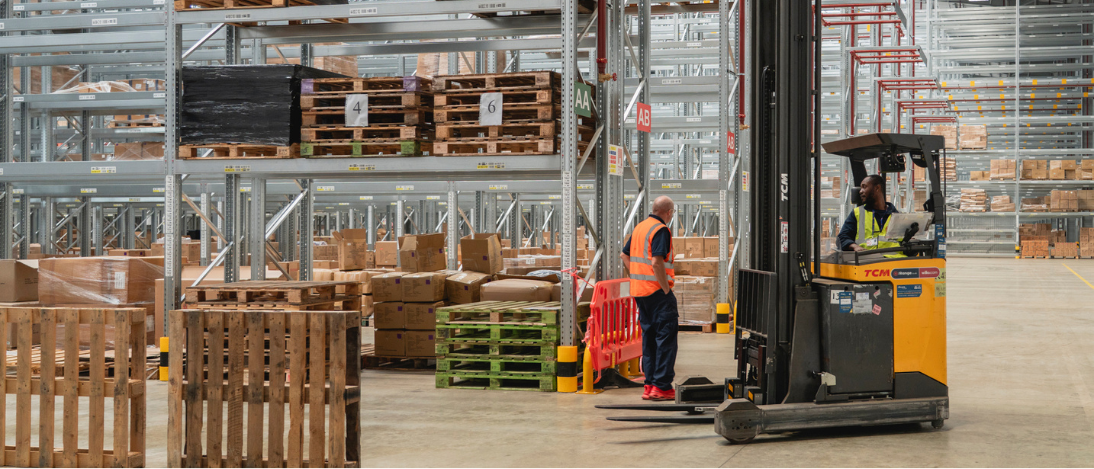
Leading operations are now shifting towards:
- Training forklift drivers on impact awareness
- Reinforcing correct loading and unloading practices
- Encouraging early reporting of minor damage
- Embedding ownership of equipment condition
This creates a culture where protecting warehouse systems becomes part of everyday performance.
Use data to support continuous improvement
Modern warehouse optimisation increasingly relies on data. Maintenance should be no different.
Tracking:
- Damage history
- Inspection outcomes
- Incident hotspots
Provides valuable insight into how your warehouse is performing over time.
This allows you to:
- Identify recurring issues
- Adjust layouts or workflows
- Prioritise targeted upgrades
In many cases, these insights lead directly into future retrofit or refurbishment decisions, creating a continuous improvement loop.
Know when to repair, reinforce, or upgrade
No warehouse system lasts forever. But with the right approach, its lifespan can be significantly extended.
The key is knowing when to:
- Repair minor damage before it spreads
- Reinforce vulnerable areas with protection
- Upgrade sections that no longer meet operational demands
A retrofit should not be seen as a fixed endpoint. It is part of an evolving strategy that adapts as your business grows.
From retrofit to long-term performance
Warehouse retrofit, refurbishment, and modernisation projects are powerful tools for improving efficiency and capacity. But their real value is only realised over time.
The most successful warehouses are not simply well designed. They are well-maintained, carefully managed, and continuously improved.
Extending the life of your warehouse systems is not about adding complexity. It is about embedding the right habits, processes, and mindset into daily operations.
Because ultimately, the difference between a good retrofit and a great one is not what gets installed, but how well it is looked after.
Take the next step
If you are unsure how your current systems are performing, or where risks may be building, the most effective starting point is a professional review of your existing warehouse setup.
A structured assessment can help you:
- Identify early signs of racking damage or structural wear
- Highlight inefficiencies in layout and workflow
- Prioritise maintenance, protection, or upgrade actions
- Extend the lifespan of your current systems while improving performance
A retrofit should never be a one-off event. It should be part of a continuous process of improvement.
Start with a clear picture of where you are today.